
Best Minecraft Server Hosts in 2026 (Honest Pros & Cons)


Choosing a Minecraft server host in 2026 isn’t just about finding any server that runs. It’s about performance under load, flexibility when your server grows, and not paying for resources you’re not using.
Minecraft servers today are dynamic: player counts fluctuate, mods add unpredictable load, and events can instantly change resource demand. That’s why some hosting models age better than others.
In this guide, we compare the best Minecraft server hosts in 2026, explain where each one shines.
What to Look for in a Minecraft Host (2026)
Before looking at providers, here’s what actually matters:
- CPU performance (Minecraft is still single-thread heavy)
- RAM scalability (usage spikes > averages)
- Disk speed (NVMe for chunk loading & saves)
- Flexibility (can you scale without downtime?)
- Pricing model (fixed tiers vs real usage)
This context is important — because it explains why some hosts work better than others.
🥇Serverwave: Built Around How Minecraft Servers Actually Behave

Serverwave takes a fundamentally different approach to Minecraft hosting. Instead of selling predefined plans based on worst-case usage, it treats a Minecraft server as something that changes constantly. The result is a usage-based model where your server scales its resources as needed, and you only pay for what is actually used, billed per hour.
In practice, this means your server can stay lean during quiet periods and automatically scale during busy moments, without you having to upgrade plans or restart anything. For modern Minecraft servers running Paper, Purpur, or modded setups, this matches reality far better than fixed tiers.
The strength of Serverwave is not just performance, but alignment. The hosting model aligns with how players behave, how mods affect load, and how communities grow over time.
Pros
- Resources scale naturally with real server activity
- No slot limits or rigid RAM tiers
- Ideal for servers that grow, experiment, or run events
- You don’t pay for idle capacity
- Free $3 signup bonus, you can try it for free
Cons
- Less appealing if you want a single flat monthly price regardless of usage
Best suited for:
Dynamic servers, growing communities, modded or plugin-heavy setups, and anyone who doesn’t want to guess future resource needs.
2. Apex Hosting: Stability Through Predictability
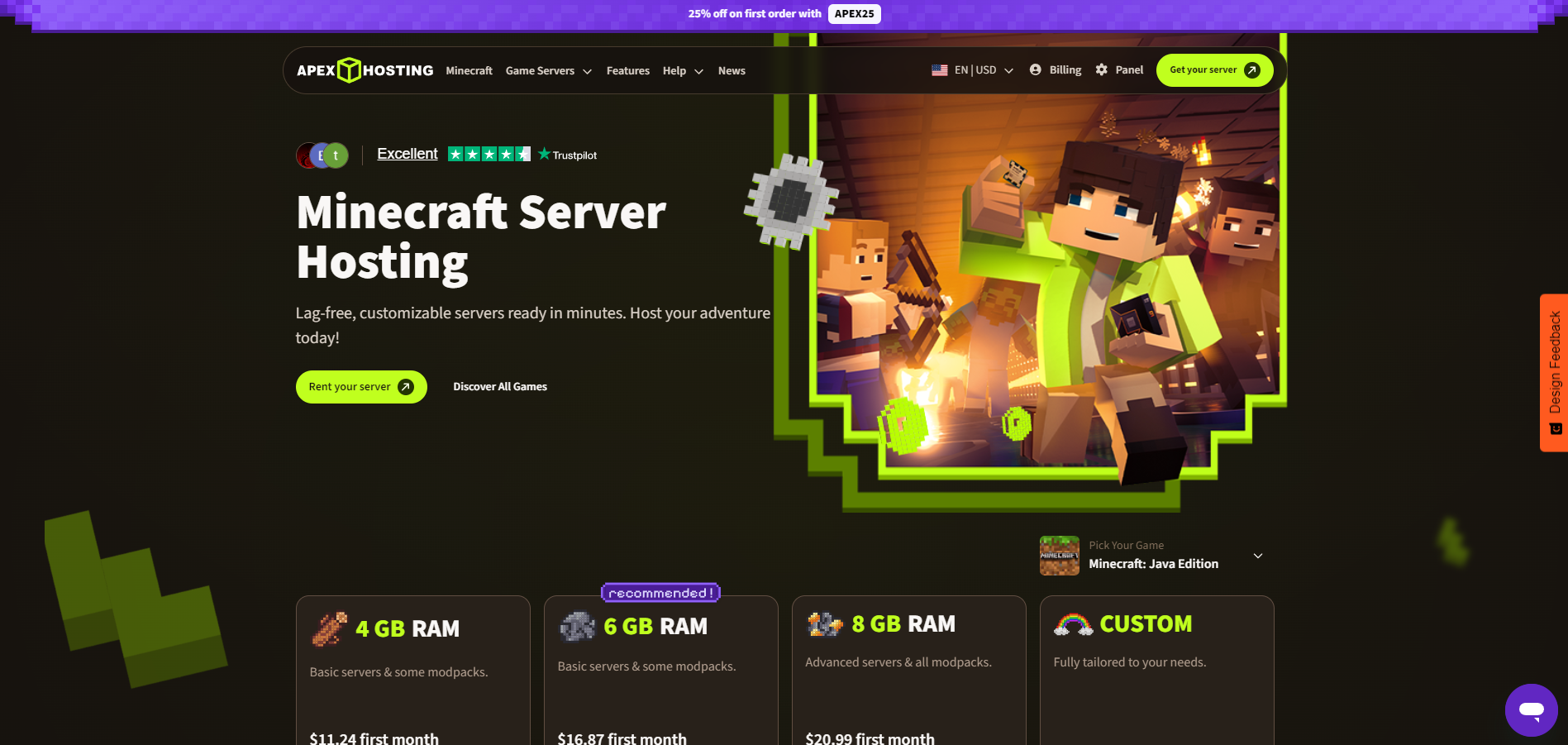
Apex Hosting represents the traditional premium Minecraft hosting model. You choose a plan with a fixed amount of RAM, pay a fixed monthly price, and operate within those limits. This approach works well when server behavior is consistent and predictable.
For long-running servers with stable player counts and minimal experimentation, Apex offers a polished experience with strong support and global server locations. The downside is that flexibility is limited. If your server briefly needs more resources, you still have to upgrade your plan, and you continue paying for that higher tier even when the server is quiet again.
Pros
- Reliable infrastructure and strong support
- Predictable monthly pricing
- Good choice for established servers
Cons
- You pay for peak capacity all the time
- Scaling requires manual plan changes
Best suited for:
Servers with steady, well-understood workloads that don’t change often.
3. BisectHosting: Optimized for Known Modded Workloads
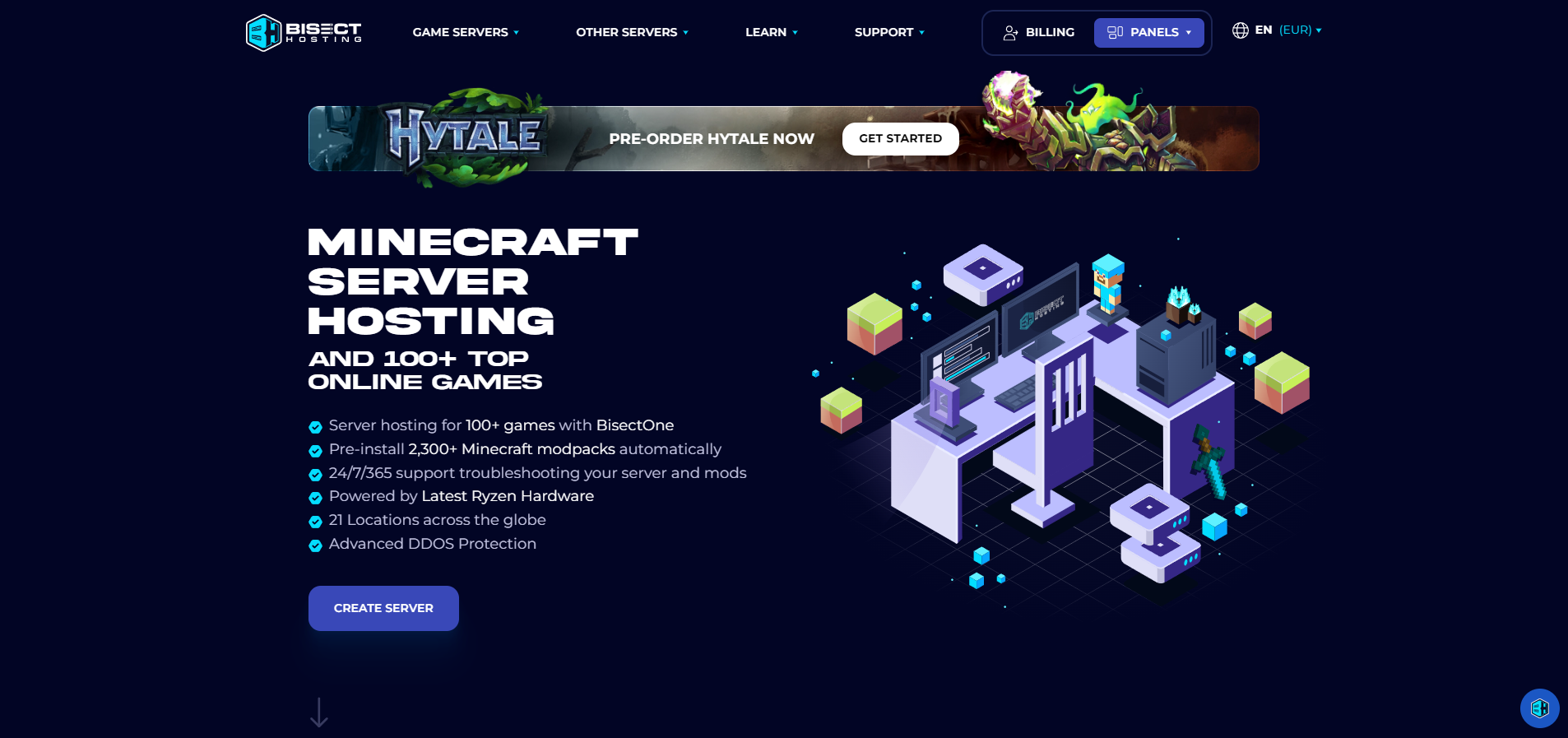
BisectHosting has built a strong reputation in the modded Minecraft space. Their platform is well-suited for large modpacks with known requirements, and their tooling makes it easy to deploy and manage complex modded environments.
Where Bisect shines is when resource needs are already well understood. The limitation comes from the same place as most traditional hosts: fixed RAM tiers. If your modded server is quiet for long periods or you frequently test different setups, you still pay for maximum allocation regardless of actual usage.
Pros
- Excellent support for Forge and Fabric modpacks
- Reliable performance for heavy, known workloads
- Good tooling for modded environments
Cons
- Costs scale quickly with higher RAM tiers
- No flexibility during low-activity periods
Best suited for:
Modded servers with predictable usage and stable configurations.
4. Shockbyte: Affordable Entry-Level Hosting
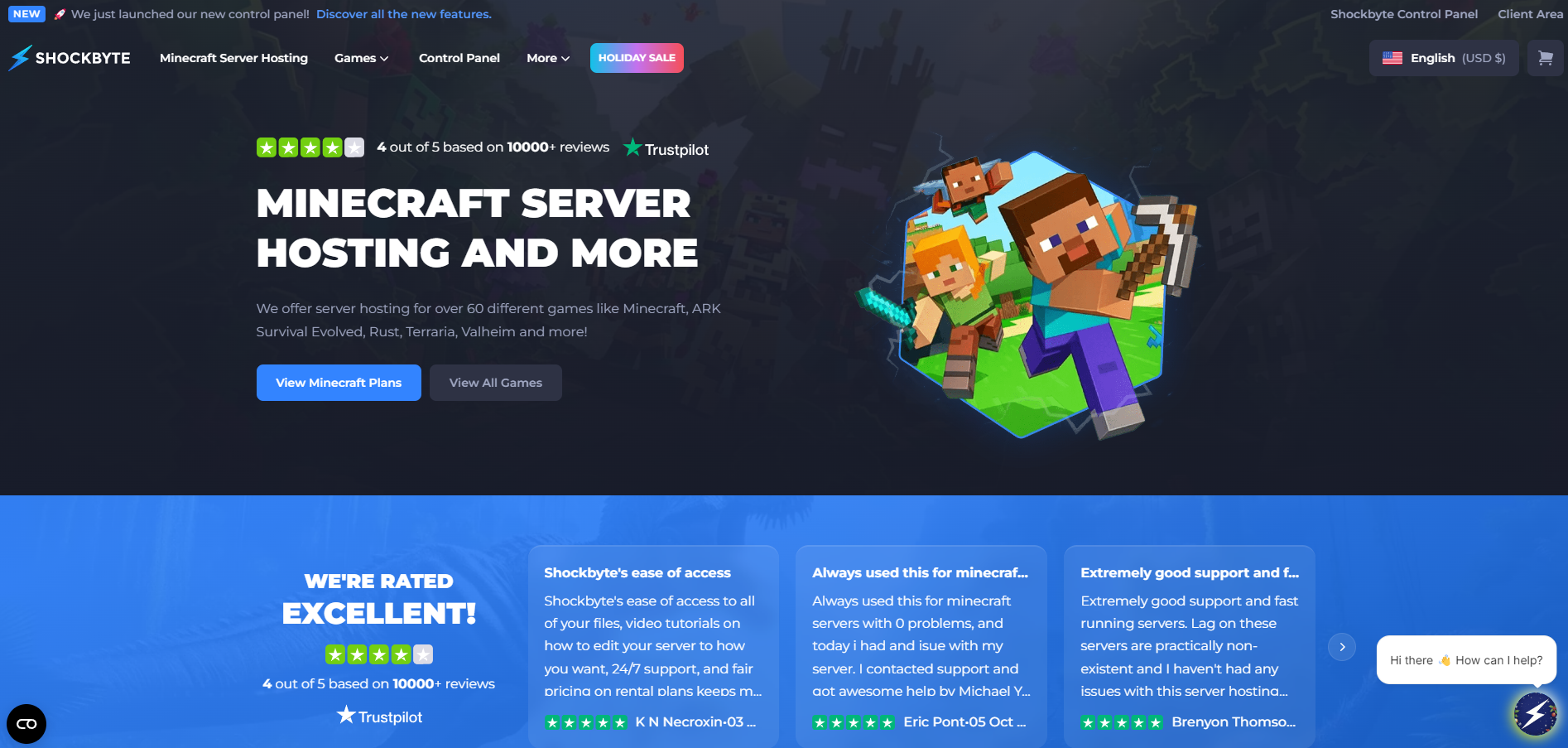
Shockbyte is often chosen by new server owners because of its affordability. For small servers with a few friends and limited plugins, it can be a reasonable starting point. The trade-off is that flexibility and performance headroom are limited.
As servers grow or become more complex, the constraints of fixed plans and limited scaling become more noticeable. Shockbyte works best when expectations are modest and usage patterns are simple.
Pros
- Low entry cost
- Suitable for small, private servers
Cons
- Limited scalability
- Less headroom for performance spikes
Best suited for:
Small, stable servers with minimal customization.
5. ScalaCube: Convenience First, Control Second
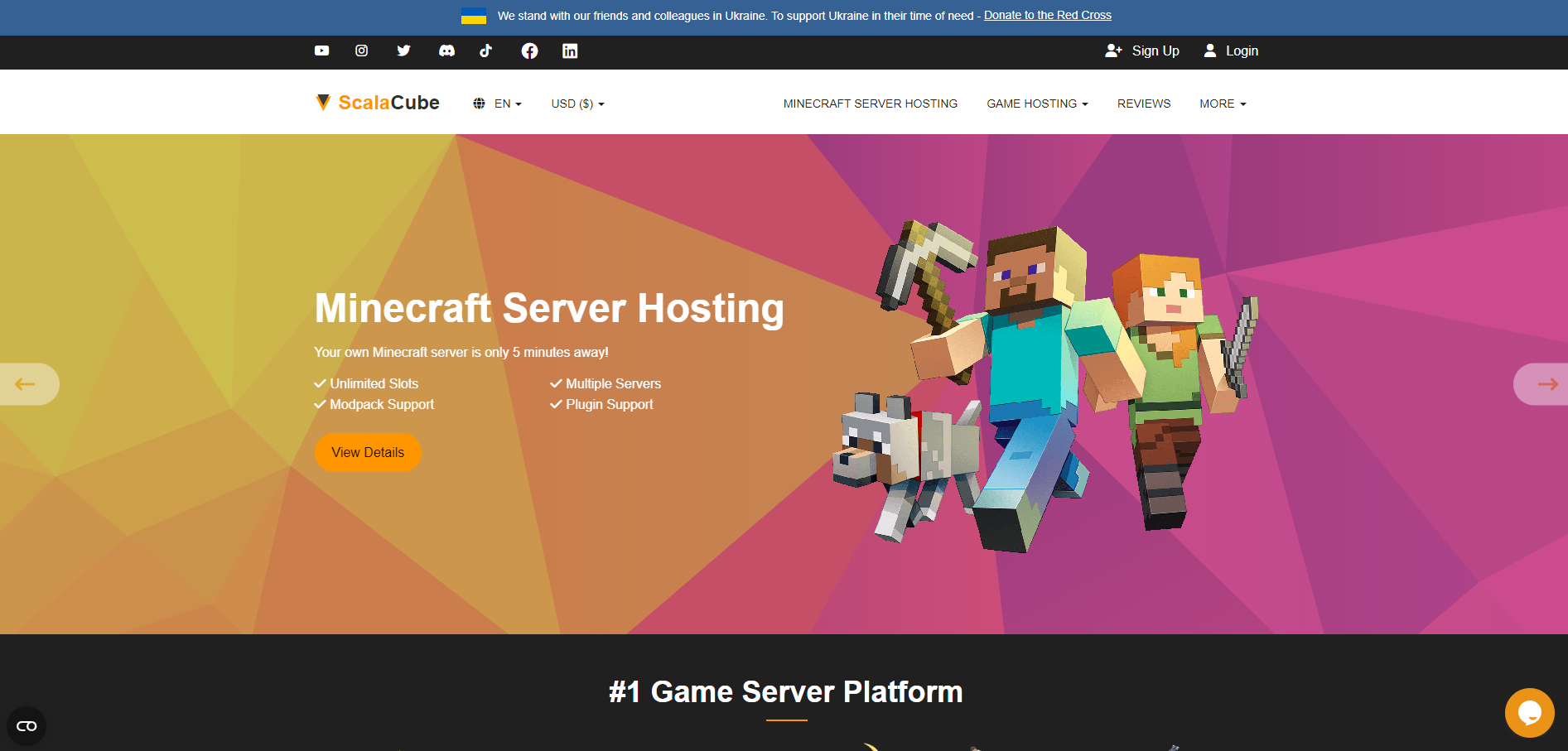
ScalaCube focuses heavily on ease of use. One-click installers and bundled extras make it attractive for beginners who want to get a server running quickly without worrying too much about configuration.
That simplicity comes at the cost of control. As servers grow and performance tuning becomes more important, many users find themselves wanting more flexibility than the platform offers.
Pros
- Very beginner-friendly
- Fast setup with minimal configuration
Cons
- Limited performance tuning options
- Less suitable for advanced servers
Best suited for:
First-time server owners who value convenience over optimization.
Why Serverwave Fits Best in 2026
The common thread across most traditional hosts is that they sell capacity. You decide in advance how much you might need, and you pay for that capacity whether you use it or not.
Minecraft servers in 2026 don’t behave that way. They spike, idle, evolve, and change direction. Serverwave is built around that reality. Instead of forcing you into predictions, it adapts as your server does.
That’s why, for modern Minecraft servers — especially those that are growing, experimenting, or community-driven — Serverwave isn’t just another option. It’s the hosting model that actually matches how Minecraft is played today.
Final Verdict
If your server is completely static and predictable, traditional hosts can still work well. But for most real-world Minecraft servers in 2026 — servers that grow, change, and experience uneven load — flexibility matters more than fixed plans.
That’s where Serverwave clearly stands apart, and why it earns the top spot in this comparison.